I love eating apples. They do say that an apple a day keeps the doctor away. I don't just like eating apples plan but I also like to cook with them. Apples are known to be very good for you. It may reduce the risk of certain cancer, help with digestion, has vitamin C, rich in antioxidant, help lose weight, and many other benefits. Red dates and snow ear you can read the benefits from the older posts on here. This dessert with the three combo can help you keep fit (controlling weight), help with fatigue, balancing your complexion, and help nourish your skin. This dessert is good for everyone in your family to eat.
Ingredients:
1 to 2 apples sliced
small handful of red dates
one big snow ear
1/2 cup of rock sugar (more or less depending how sweet you like your dessert)
Preparation:
Boil 8 cups of water, place all ingredients into the boiling water. Let it boil for ten minutes then turn down the heat and let it cook for an hour then turn off heat. Serve hot or place it into the fridge and serve as a cold drink.
Sharing helpful information on alternative medication through Chinese herbs. Personal recipes of Chinese herbal soups, congee, desserts that will help better your health and set you on the path to beauty.
Showing posts with label snow fungus. Show all posts
Thursday, December 1, 2011
Snow Ear, Red Dates and Apple Dessert
Thursday, November 17, 2011
Snow Fungus aka Snow Ear (Tremella fuciformis)
Tremella fuciformis is a species of fungus producing white, frond-like, gelatinous basidiocarps (fruit bodies). It is widespread, especially in the tropics, and is parasitic on other fungi (Hypoxylon species), that grow on dead attached and recently fallen branches of broadleaf trees. Fruitbodies are commercially cultivated for use in Chinese cuisine and Chinese medicine. Tremella fuciformis has been given the common names snow fungus or silver ear fungus.
In Chinese cuisine, Tremella fuciformis is traditionally used in sweet dishes. While tasteless, it is valued for its gelatinous texture as well as its supposed medicinal benefits. Most commonly, it is used to make a dessert soup called luk mei (六味), often in combination with jujubes, dried longans, and other ingredients. It is also used as a component of a drink and as an ice cream. Since cultivation has made it less expensive, it is now additionally used in some savoury dishes.
In Chinese, it is called 银耳 (pinyin: yín ěr; literally "silver ear"), 雪耳 (pinyin: xuě ěr; literally "snow ear"); or 白木耳 (pinyin: bái mù ěr, literally "white wood ear")[citation needed], and in Japanese it is called shiro kikurage (シロキクラゲ, lit. "white tree jellyfish") . In Vietnam, it is called nấm tuyết or ngân nhĩ.
Author's Input:
The snow ear is an herb full of collagen, and this helps with firming up and adding moisture to your skin from within. I love making this refreshing dessert all year round. I remember when I was young, I would never eat the snow fungus at all. As I matured, I developed a taste for this herb or more like the texture of the herb because snow fungus is kind bland.
Lotus seeds
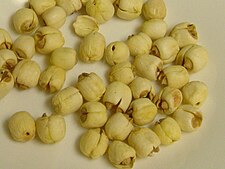
Dried Lotus Seeds:
Lotus seeds or lotus nuts are the seeds of plants in the genus Nelumbo, particularly the species Nelumbo nucifera. The seeds are of great importance to East Asian cuisine and are used extensively in traditional Chinese medicine and in Chinese desserts. The seeds are most commonly sold in the shelled and dried form. Fresh lotus seeds are relatively uncommon in the market except in areas of lotus root and seed production, where they are sometimes sold as a raw snack.
When cooked in clear soups, lotus seeds are believed in Chinese medicine to "clear heat" (清熱) and be particularly nutritious and restorative to one's health, which may explain the prevalence of their use in Chinese cuisine.
Other ingredients that are considered "cooling" or restorative in Chinese medicines, which are often cooked in a sweetened soup with lotus seeds include:
* Azuki beans (紅豆)
* Job's Tears (薏仁)
* Dried jujubes (紅棗)
* Mung beans (绿豆)
* Asian pear (雪梨)
* Snow fungus (银耳 or 白木耳)
(source from wiki)
Author's Input:
I remember taking these out of the bag and using them to bead a necklace. My mommy came home and one time scream at the sight because I used them all up and she needed them for a dessert she was going to make for my grandma. I love adding these little guys into my snow fungus and Asian pear dessert or papaya. I will post some yummy dessert recipes later.
Subscribe to:
Posts (Atom)